
Tyre Waste Management
We provide expert support for all your Waste Tyre Regulation and EPR registration requirements — from documentation to end-to-end compliance support.
Introduction to EPR for Waste Tyre Management
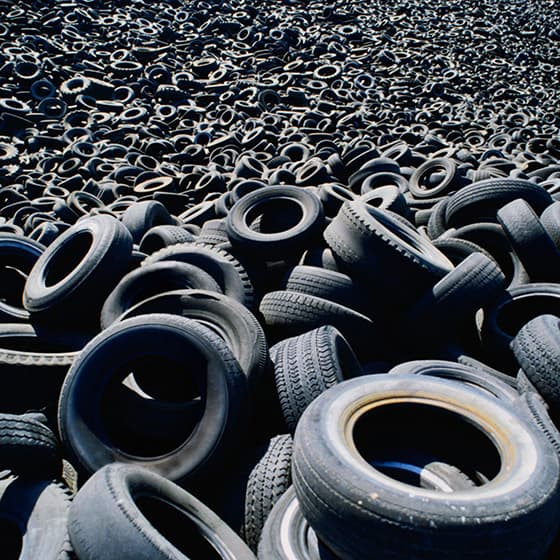
Waste tyre management has become a global concern due to the growing focus on environmental sustainability. Tyres are non-biodegradable and take centuries to decompose, occupying significant landfill space. In response to poor handling of End-of-Life Tyres (ELTs), the NGT directed the CPCB to develop a comprehensive waste management and recycling plan.
To address these challenges, Extended Producer Responsibility (EPR) registration for Waste Tyre Management has emerged as a critical tactic in reducing the environmental consequences associated with tyre waste. However, following these advanced guidelines requires effective tyre waste management strategies, compliance expertise, and resources.
The Hazardous and Other Wastes Amendment Rules, 2022 for EPR for Waste Tyre were released by the Ministry of Environment, Forests, and Climate Change. This amendment became effective on July 21, 2022, detailing the registration procedure for all parties engaged in tyre production and administration.
Applicability
The following entities are subject to the provisions of Schedule IX under EPR for Waste Tyre Management
Producer
Means any person or entity who falls under any of the following categories:
- • Manufactures and markets new tyres domestically
- • Sells new tyres manufactured by others under own brand
- • Sells imported new tyres
- • Imports vehicles fitted with new tyres
- • Imports new tyres for use in vehicles sold domestically
- • Imports waste tyres
Recycler
Any individual or organization involved in recycling. Recycling is the environmentally responsible method of turning used tyres into the following products:
- • Reclaimed rubber
- • Crumb rubber
- • Crumb rubber modified bitumen (CRMB)
- • Recovered carbon black (usable as raw material)
- • Pyrolysis oil or Char (used only as fuel)
Note: The recycling target is the quantity of used tyres that must be recycled in accordance with Schedule IX's rules.
Retreader
Any individual or organization engaged in the replacement of the tread and sidewall rubber in worn-out tyres with excellent structural integrity.
Amended Requirements & Responsibilities
New specifications for developing systems for accumulating, transporting, recycling, or properly discarding used tyres
Producers
- • Responsible for fulfilling EPR by purchasing extended producer responsibility certificates from registered recyclers only
- • Must file annual and quarterly returns in specified forms on the CPCB portal before the end of the month succeeding the quarter
- • Each registered entity must file quarterly returns
Recyclers
- • Submit monthly information regarding quantity of waste tyres used and end products produced on the portal
- • Report extended producer responsibility certificates sold and other relevant information
- • File annual and quarterly returns in specified forms on the portal
Retreaders
- • Retreading of scrap tyres is now permitted
- • Must register on the CPCB portal to issue retreading certifications
- • EPR duty was delayed by one year (until 2023) upon submission of certifications
- • Obligation cancelled following end-of-life disposal through licensed recycler
Key Points under EPR Authorization for Waste Tyres
Cancellation
To avoid fines or cancellation, producers must meet their EPR objectives on schedule.
Warning: EPR registration can be revoked if supporting documentation is found to be inaccurate. CPCB has authority to levy environmental compensation and suspend/terminate EPR for non-compliance.
Validity
Initial Validity: EPR Certificate is valid for 2 years after issuance
Renewal: Can be renewed for an additional 3 years
Procedure to Obtain EPR Registration for Tyre Waste
Step-by-step process for EPR certification
Documentation Review
Applicants must furnish all necessary information for EPR tyre waste certification. Our skilled staff will examine all information and paperwork for any inconsistencies.
Authority Submission
Once our team of specialists has examined all documentation, a request will be made to the relevant EPR authorities.
CPCB Assessment
The CPCB will assess the online application for EPR registration. If any issues or discrepancies are discovered, relevant changes will be made to remedy them.
Certificate Issuance
Within 50-60 days of application submission, the certificate of authorization will be issued. Producers must implement an EPR action plan after certificate grant to reach EPR objectives.
Timeline: Certificate issuance typically takes 50-60 days from application submission.
How VINCULAR Can Help Your Business
Comprehensive assistance throughout the EPR registration process with CPCB
Compliance Management
- Managing compliance tasks such as quarterly reporting and record-keeping
- Handling acquisition of EPR certificates from accredited recyclers
- Streamlining the certification process for efficiency
Advisory Services
- Providing insights on necessary documentation for EPR certification
- Advising on penalties and compensation linked to non-compliance
- Best practices, cost-efficiency strategies, and environmental sustainability initiatives
Ready to Achieve EPR Compliance for Waste Tyres?
Let our environmental compliance experts guide you through the EPR registration process for sustainable waste tyre management and regulatory compliance.
Related Services
Explore other compliance services that may apply to your products.
E-Waste EPR Authorisation
EPR compliance for electrical and electronic equipment producers.
Battery Waste EPR Registration
EPR compliance for portable, automotive, and industrial batteries.
Plastic Waste EPR Registration
EPR compliance for plastic packaging and products.
Used Oil Waste Management
Compliance for producers and recyclers of used lubricating oil.